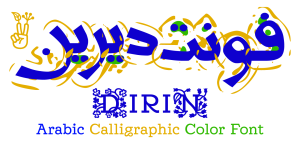
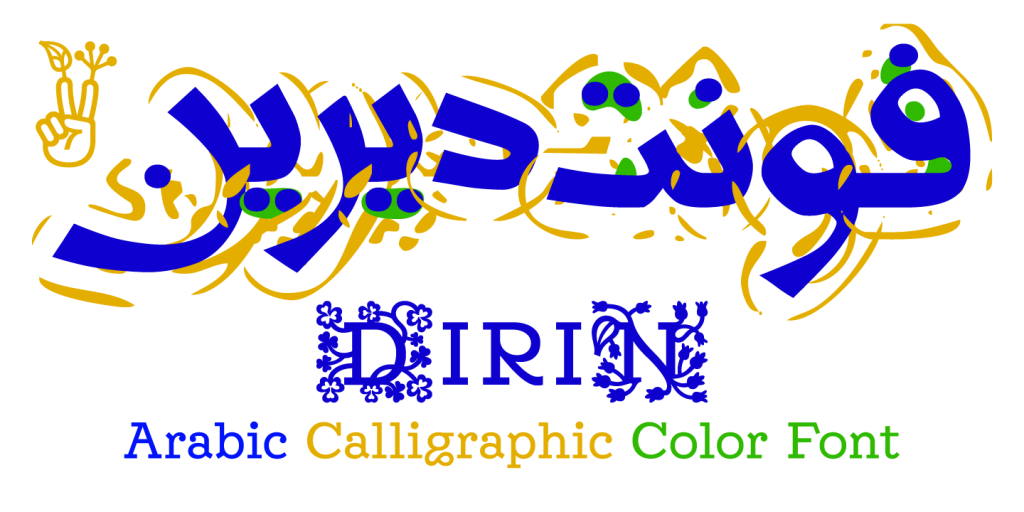
This calligraphic typeface is based on the forms of the Piramouz script and is called Dirin.
A brief look at Avestan, Pahlavi, and Kufic scripts suggests a historical connection between them. Many researchers believe that the roots of Kufic, Naskh, and Ta’liq can be traced back to Pahlavi. Piramouz itself was a script associated with Iranian writing traditions during the Sasanian period, and its flowing connections and movements share noticeable similarities with early Kufic forms.
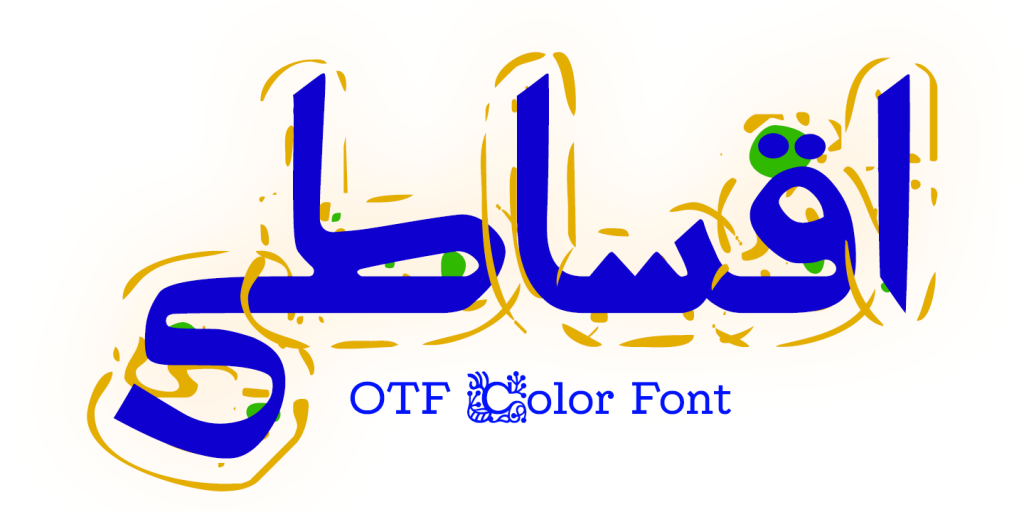
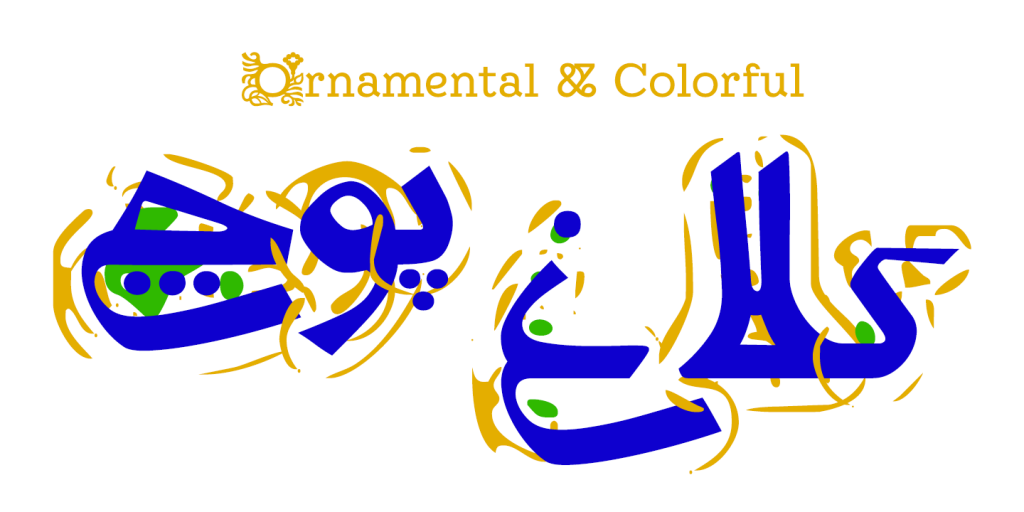
Dirin, however, is not simply a historical revival. It is a multicolor font. I have written about multicolor typefaces before on this site: fonts whose letters contain built-in color layers and decorative forms.
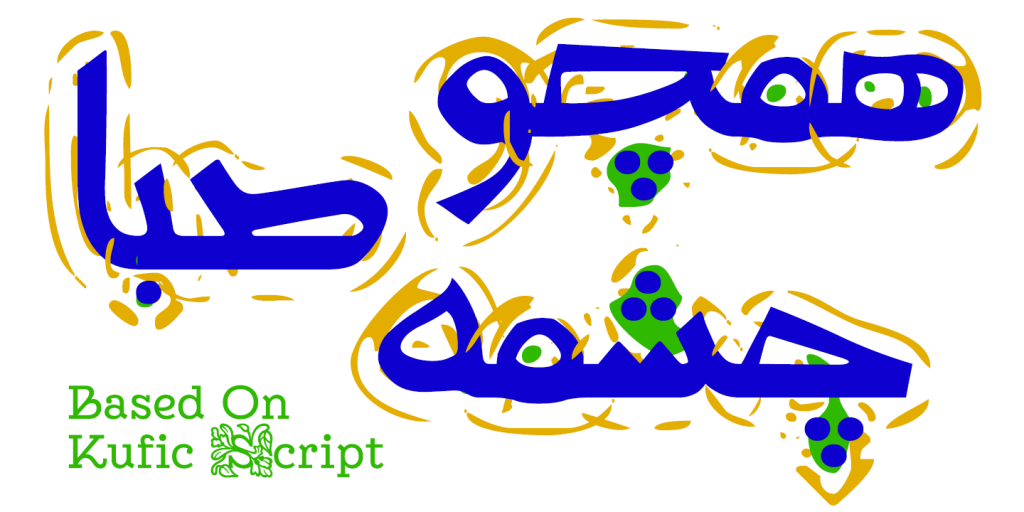
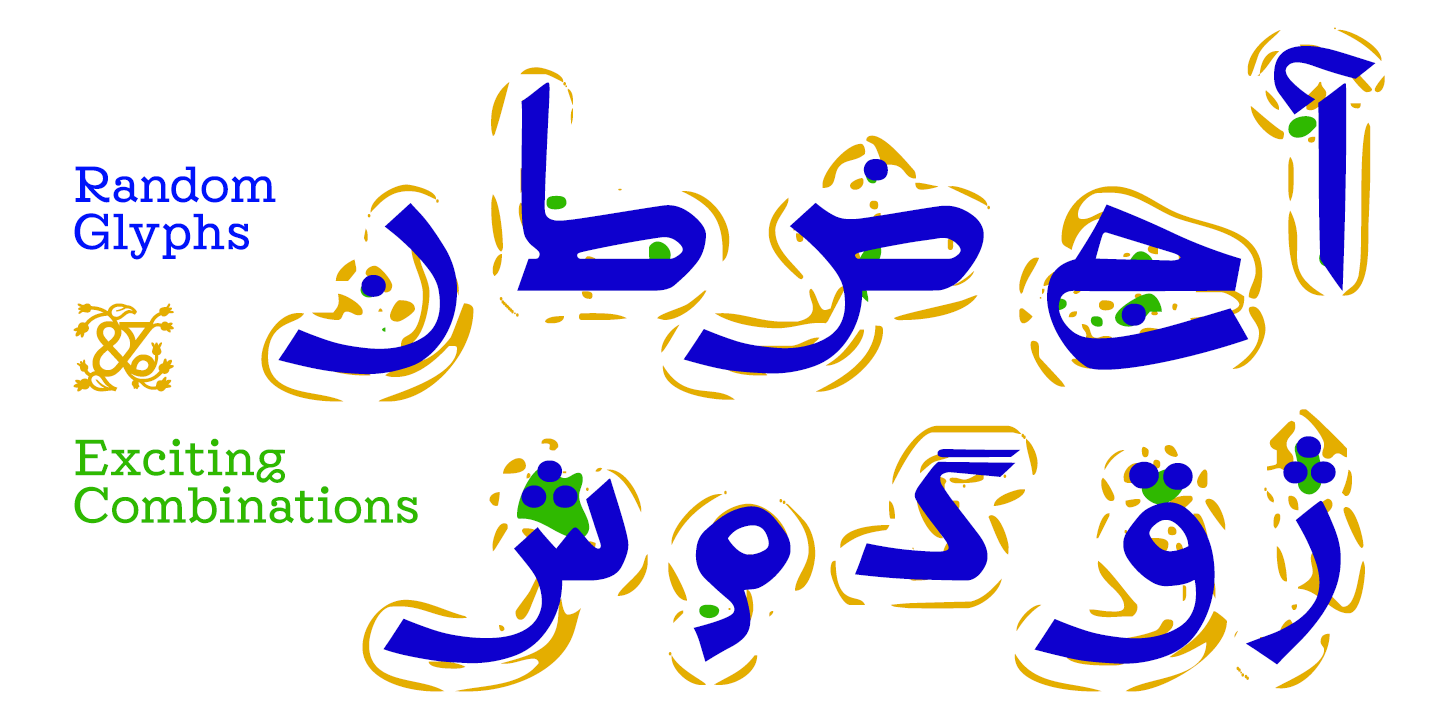
The palette combines navy blue, gold, and green, with the gold and green layers acting as ornamental accents. These decorative forms add texture and pattern to the letters, carrying the Piramouz script into a more contemporary visual world. The colorful, irregular details make the characters feel less like historical artifacts and more like living forms with a new identity.
I’ve mentioned before that a sense of randomness is often present in my type design process, and that idea appears here as well. The decorative motifs—especially the green layer—are generated in an intentionally improvised way. This controlled unpredictability helps the viewer feel that they’re seeing something more dynamic than a single static font.
The rest is best experienced through the images themselves.
And If you want to add more users or upgrade / change to another License, you can do that here. (The default license is the Desktop Standard License)
Shahab Siavash, the designer has done more than 47 fonts and got featured on Behance, Microsoft, McGill University research website, Hackernoon, Fontself, FontsInUse,... Astaneh and Hezareh text and headline fonts which is one of his latest designs, already got professional typographers, lay-out and book designers' attention as well as some of the most recognizable publications in Arabic/Persian communities.